
Best Foods for Healthy Teeth: A Dentist's Guide to Strong Teeth and Gums
• By Dr. Asheesh K. Sawhny
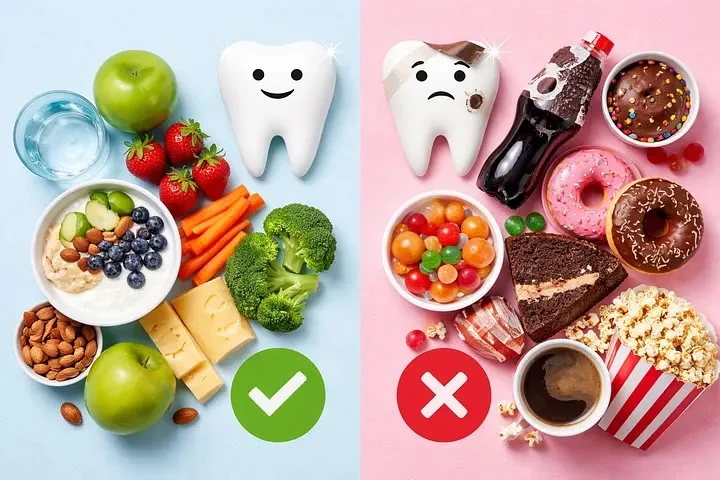
The short answer: the best foods for healthy teeth are plain, lightly processed foods that are low in added sugar and rich in calcium, phosphorus and protein: milk, curd and paneer, leafy greens, crunchy fruit and vegetables, nuts and seeds, eggs, fish, dal and plain water. For your teeth, how often you eat sugar or sip acidic drinks matters as much as what you eat, so cutting down on constant snacking helps more than adding any single “superfood”.
This guide explains how food affects your teeth and gums, which foods help, which to limit, and when it is time to see a dentist. If you are in Kanpur and would like a personalised check, call +91 98385 00100 or book an appointment.
Table of Contents
- 1. How Food Affects Your Teeth and Gums
- 2. Nutrients Your Teeth and Gums Need
- 3. Foods That Support Healthy Teeth
- 4. Foods That Support Healthy Gums
- 5. Foods and Drinks to Limit
- 6. Enamel Erosion: The Acid Problem
- 7. Simple Eating Habits That Protect Teeth
- 8. What a Tooth-Friendly Day Can Look Like
- 9. When to See a Dentist
- 10. Dental Care at Dr Sawhney's My Dentist, Kanpur
- 11. Frequently Asked Questions
- 12. References
1. How Food Affects Your Teeth and Gums
Tooth decay begins when bacteria in plaque use sugars from food and drink to make acid. That acid dissolves minerals from enamel, the hard outer layer of the tooth. Saliva gradually neutralises the acid and returns minerals, but it needs time. Sipping sweet chai through the morning keeps your teeth under repeated acid attack, whereas a dessert eaten once with a meal gives saliva a chance to recover.
The American Dental Association makes the same point in its nutrition guidance: both what you eat and how often you eat it affect dental health, and acidic foods and drinks can wear away enamel. The World Health Organization advises keeping free sugars below 10% of daily energy intake, and below 5% if possible, as part of reducing tooth decay (WHO sugars guideline). Free sugars include sugar added to tea and sweets, honey, syrups and fruit juice.
One honest limit: once enamel is lost it does not grow back. Food can help protect teeth and support early repair, but it cannot fill a cavity.
2. Nutrients Your Teeth and Gums Need
- Calcium and phosphorus are the main minerals in enamel and dentine. Milk, curd, paneer, cheese, sesame (til), almonds, ragi and green leafy vegetables supply them.
- Vitamin D helps your body absorb calcium. Sunlight, eggs, fish and fortified foods contribute.
- Vitamin C keeps gum tissue healthy. Severe deficiency causes swollen, bleeding gums. Guava, amla, oranges, lemon, tomatoes and capsicum are good sources.
- Protein supports tissue repair, including gums. Eggs, fish, dal, chana, rajma, tofu and lean meat help.
3. Foods That Support Healthy Teeth
Plain dairy. Milk, curd (dahi), paneer and cheese provide calcium and phosphate, and chewing cheese stimulates saliva. Choose unsweetened versions; flavoured yoghurts and lassi often carry a lot of added sugar.
Leafy greens. Palak, methi, sarson and broccoli provide calcium, folate and vitamin C. They are also low in sugar and need chewing.
Crunchy fruit and vegetables. Apples, guava, cucumber, carrot and radish make you chew, which increases saliva. They do not “brush” your teeth, so they never replace brushing, but they are a far better snack than biscuits.
Nuts and seeds. Almonds, unsalted peanuts, sesame and sunflower seeds offer minerals and protein with very little sugar. Skip sugar-coated versions such as chikki and candied nuts as everyday snacks.
Protein foods. Eggs, fish, dal, chana and lean meat supply phosphorus and protein for tooth and gum tissue.
Water. Plain water rinses food and acid from the mouth. Drinking a glass after meals and sweets is one of the simplest habits you can build.
4. Foods That Support Healthy Gums
Healthy gums depend first on removing plaque with good brushing and flossing, and diet plays a supporting role. Vitamin C-rich fruit and vegetables, leafy greens, protein foods and plain dairy all help. Tobacco in any form, including gutka, supari and paan with tobacco, damages gums and raises the risk of serious mouth disease. If your gums bleed regularly, food will not fix it; see our gum treatment page.
5. Foods and Drinks to Limit
- Sugary drinks: cold drinks, packaged juices, energy drinks and sweetened squash bathe teeth in sugar, and many are also acidic.
- Sweet chai or coffee sipped all day: the frequency, more than the quantity, is the problem.
- Sticky sweets: toffee, caramel, jalebi, gajak and sticky dried fruit cling to teeth and keep feeding bacteria.
- Constant snacking: biscuits, chips and namkeen leave starch and sugar on teeth between meals.
- Acidic items taken often or slowly: soda, lemon-soda, vinegar-based drinks and sour sweets can soften enamel.
6. Enamel Erosion: The Acid Problem
Decay and erosion are different. Decay comes from bacteria producing acid. Erosion comes from acid in food and drink itself dissolving enamel, with no bacteria needed. Early signs are sensitivity to cold, teeth that look slightly translucent at the edges, and a smoother, glossy surface. To reduce risk, finish acidic drinks quickly rather than sipping, use a straw for cold drinks, rinse with plain water afterwards, and ask your dentist about timing your brushing; many dentists advise waiting around half an hour so softened enamel is not scrubbed. Eat citrus fruit with meals instead of on its own.
7. Simple Eating Habits That Protect Teeth
- Keep sugary foods to mealtimes rather than spreading them across the day.
- Choose water as your default drink, and limit the sugar in tea and coffee.
- End a meal with water, a piece of cheese or a crunchy fruit.
- Brush twice a day with fluoride toothpaste and clean between teeth daily. Our guide to preventive dental care and oral hygiene covers technique in detail.
- Keep regular dental check-ups so problems are caught before they hurt.
8. What a Tooth-Friendly Day Can Look Like
Breakfast of vegetable poha or an egg with a glass of milk; a guava or apple mid-morning; lunch of dal, sabzi with leafy greens, roti and curd; a handful of almonds or roasted chana in the evening; fish, paneer or dal for dinner; water between meals. Sweets and cold drinks, if you want them, fit best right after a meal.
9. When to See a Dentist
Book a visit if you notice tooth pain, sensitivity to hot, cold or sweet food, white, brown or black spots on teeth, gums that bleed or swell repeatedly, persistent bad breath, loose teeth, or a mouth ulcer that does not heal within a few weeks. Children also benefit from early check-ups; see our children's dentistry guide. For severe pain or swelling, call us the same day.
10. Dental Care at Dr Sawhney's My Dentist, Kanpur
If you are looking for a dentist in Kanpur for a personalised check, Dr Sawhney's My Dentist (MY DENTIST) is at 117/L-1/455-A, Naveen Nagar, Kakadeo, Kanpur, Uttar Pradesh – 208025, near Panacea Hospital. We are open Monday to Saturday, 4 PM to 9 PM, and Sunday, 11 AM to 2 PM.
Call +91 98385 00100 (also +91 6387704586 and +91 8808500100) or book an appointment. Our preventive dentistry service includes check-ups, scaling and polishing and fluoride advice.
Patients who have visited can share their experience on Google.
11. Frequently Asked Questions
What are the best foods for healthy teeth?
The best foods for healthy teeth are low in added sugar and rich in calcium, phosphorus and protein: plain milk, curd, paneer and cheese, leafy greens, crunchy fruit and vegetables, nuts and seeds, eggs, fish, dal and plain water. No single food protects teeth on its own; the overall pattern and how often you eat sugar matter most.
Can food repair or strengthen tooth enamel?
Enamel cannot regrow once it is lost, so no food can rebuild it. Minerals from food and saliva, together with fluoride toothpaste, can help early, weakened areas remineralise. Once a cavity forms, it needs treatment from a dentist.
Which foods are good for gums?
Foods rich in vitamin C, such as guava, amla, oranges and capsicum, along with leafy greens, protein foods and plain dairy, support gum health. Gums that bleed regularly usually signal plaque build-up or gum disease, which needs professional cleaning and good home care, not diet alone.
Are fruits bad for teeth because they contain sugar?
Whole fruit is generally a good choice because it contains fibre and water and is usually eaten with meals. Fruit juice and dried fruit are more concentrated and stickier, so limit them, and eat citrus fruit with meals rather than sipping its juice through the day.
Which foods and drinks should I avoid for healthy teeth?
Limit sugary drinks, sticky sweets, frequent snacking and sweet tea or coffee sipped all day, and be careful with acidic drinks such as soda and energy drinks. Avoid tobacco in every form, including gutka and supari, because it harms gums and increases the risk of serious oral disease.
Should I brush straight after eating?
After sugary or acidic foods, rinse your mouth with plain water first. Many dentists advise waiting about 30 minutes before brushing so softened enamel is not scrubbed away. Brush twice daily with fluoride toothpaste, and ask your dentist if you are unsure what suits you.
12. References
- American Dental Association, MouthHealthy: Nutrition's Impact.
- World Health Organization, Guideline: Sugars intake for adults and children (2015); full text on NCBI Bookshelf.
Related Articles
 Dental Tips
• Dr. Asheesh K. Sawhny
Best Dentist in Kanpur: The Complete 2026 Guide to Choosing the Right Dental Clinic
Looking for the best dentist in Kanpur? Dr Sawhney’s My Dentist, Kanpur offers painless RCT, implants, braces & smile makeovers. MDS specialists. Book today.
Read More Dental Tips
• Dr. Asheesh K. Sawhny
Best Dental Clinic in Kanpur: Matching the Right Specialist to Your Smile
Choosing a dental clinic in Kanpur is easier when you start with your problem. Learn how specialist care, modern technology and preventive habits fit together, and what to ask before your first visit.
Read More Dental Tips
• Dr. Karuna Singh Sawhny
Family & Kids Dentistry in Kanpur: A Parent's Guide to Your Child's Dental Health
A parent's guide to children's dental care in Kanpur — first visits, cavity prevention, sealants and choosing the right family dentist, from MDS specialists at Kakadeo.
Read More Dental Tips
• Dr. Asheesh K. Sawhny
Preventive Dental Care in Kanpur: The Complete Oral Hygiene Guide for Every Age
A specialist-written guide to preventing cavities, gum disease and dental problems — daily oral hygiene habits, when to get a check-up, and expert tips from Dr Sawhney's My Dentist, Kakadeo.
Read MoreHave a dental question?
Speak with a specialist at DR SAWHNEY’S MY DENTIST — we'll guide you honestly.