
Sleep Apnea and Your Jaw: Dental Signs, Causes, and Treatment Options
• By Dr. Karuna Singh Sawhny
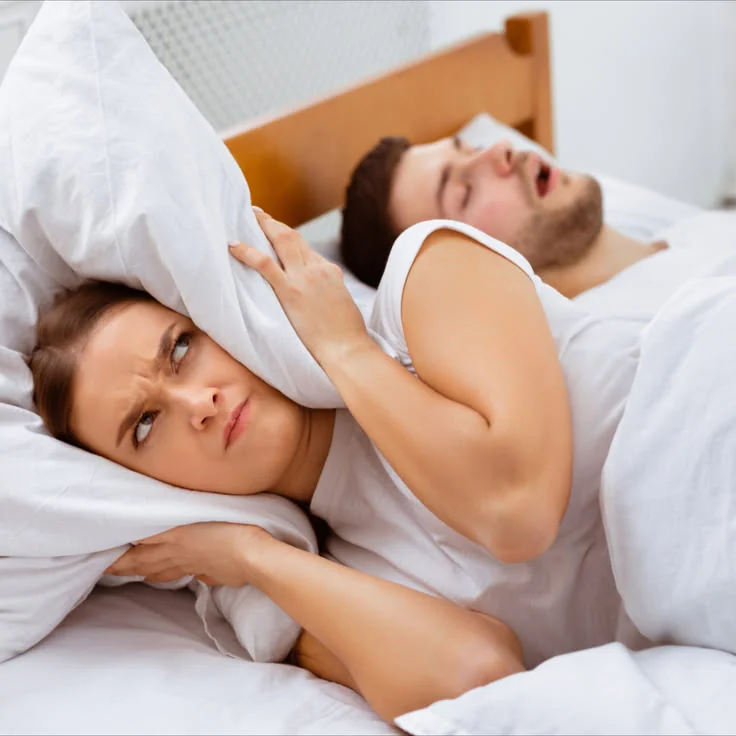
The short answer: sleep apnea is a condition in which breathing repeatedly stops and restarts during sleep. In obstructive sleep apnea (OSA), the upper airway becomes blocked, sometimes because the tongue and soft tissues fall backwards. The size and position of your jaws can affect how much room your airway has, which is why dentists and orthodontists take an interest, but the jaw is only one factor among many, and only a sleep study arranged through a doctor can confirm the diagnosis.
This guide explains the link between sleep apnea and the jaw, the dental signs that may be worth mentioning to a doctor, and the treatment options, including what oral appliances can and cannot do.
Table of Contents
- 1. What Is Obstructive Sleep Apnea?
- 2. How Are the Jaw and the Airway Connected?
- 3. Symptoms of Sleep Apnea
- 4. Dental Clues a Dentist May Notice
- 5. Does Teeth Grinding Mean You Have Sleep Apnea?
- 6. How Is Sleep Apnea Diagnosed?
- 7. Treatment Options
- 8. Oral Appliances for Sleep Apnea: What They Can and Cannot Do
- 9. Where Does Orthodontics Fit?
- 10. What to Do If You Suspect Sleep Apnea
- 11. Dental and Orthodontic Assessment at Dr Sawhney's My Dentist, Kanpur
- 12. Frequently Asked Questions
- 13. References
1. What Is Obstructive Sleep Apnea?
The US National Heart, Lung, and Blood Institute (NHLBI) describes sleep apnea as a common condition in which breathing stops and restarts many times during sleep, which can stop the body getting enough oxygen (NHLBI). There are two main types. In OSA, the most common, the upper airway becomes blocked repeatedly. In central sleep apnea, the brain does not send the signals needed to breathe. This article focuses on OSA, because it is the type linked to airway and jaw anatomy.
OSA matters beyond tiredness. NHLBI notes that untreated sleep apnea can affect concentration, decision-making and memory, and increases the risk of stroke, heart attack and other serious problems.
2. How Are the Jaw and the Airway Connected?
The airway runs behind the tongue and soft palate. The tongue is anchored to the lower jaw by muscles, so the position of the lower jaw influences where the tongue rests. When you sleep, the muscles of the mouth and throat relax. If there is already limited space, for example because of a small or set-back lower jaw, a narrow upper jaw, a large tongue or large tonsils, the airway can narrow or close. NHLBI says genes help shape the skull, face and upper airway, and lists a large tongue or tonsils among features that can make blockage more likely (causes and risk factors).
Two cautions. First, many people with an average jaw have OSA, and many people with a small jaw do not. Age, weight, family history, alcohol, smoking and other medical conditions all contribute. Second, jaw shape is something a specialist can assess, but it is not a test for sleep apnea.
3. Symptoms of Sleep Apnea
NHLBI lists these symptoms (symptoms):
- During sleep: breathing that starts and stops, frequent loud snoring (more common in men), and gasping for air. You may not know unless a partner tells you.
- During the day: sleepiness and tiredness that can affect learning, focus and reactions; dry mouth; headache; insomnia; fatigue; and waking often at night to urinate. Some people notice headaches on waking.
- In children: overactivity, bedwetting, worsening asthma and trouble paying attention at school.
4. Dental Clues a Dentist May Notice
A dental examination can sometimes raise the question of sleep-disordered breathing. These are clues to discuss with a doctor, never proof:
- A dry mouth or signs of habitual mouth breathing, such as inflamed gums at the front of the mouth.
- Worn, flat tooth surfaces that suggest grinding.
- A narrow dental arch with crowded teeth, or a lower jaw that sits well behind the upper.
- Indentations along the edges of the tongue, or an unusually large tongue or tonsils on examination.
Each of these has many ordinary explanations. A dentist who notices them should ask about your sleep and, where it seems appropriate, recommend that you see a physician. The American Academy of Sleep Medicine (AASM) states that snoring, which is a cardinal symptom of OSA, should be assessed by a sleep physician and not diagnosed by a dentist (AASM).
5. Does Teeth Grinding Mean You Have Sleep Apnea?
No. Grinding (bruxism) has many causes, including stress, bite problems, medicines and habits such as heavy caffeine or alcohol use. Some people who grind at night also have disturbed breathing during sleep, and research continues on how the two relate, but grinding alone does not prove sleep apnea, and most people who grind do not have it. If you grind and also snore loudly, stop breathing at night or feel very sleepy in the day, mention all of it to your doctor. A dentist can protect worn teeth and discuss bite splints, but a splint for grinding is not a treatment for sleep apnea.
6. How Is Sleep Apnea Diagnosed?
Diagnosis needs a medical assessment. According to NHLBI, a doctor may diagnose sleep apnea from your medical history, a physical examination and the results of a sleep study, and may refer you to a sleep specialist or sleep centre for that study (NHLBI diagnosis page). Dentists and orthodontists can screen, record airway and jaw findings, and refer. They cannot diagnose OSA from a mouth examination, X-ray or photographs. Treatment choices depend on the sleep study result and your overall health.
7. Treatment Options
According to NHLBI, treatment may include the following (treatment):
- Lifestyle changes: regular activity, a healthy weight, limiting alcohol and caffeine, not smoking, and sleeping on your side rather than your back if your provider advises it.
- Positive airway pressure (CPAP, BPAP or APAP): the most common treatment, delivering air pressure to keep the airway open. The AASM and the American Academy of Dental Sleep Medicine (AADSM) guideline notes that CPAP should generally be the first-line option, as it is better at improving oxygen levels and reducing the number of breathing events.
- Oral devices: prescribed if you cannot or do not want to use CPAP. NHLBI explains that a dentist or orthodontist custom-fits the device.
- Mouth and facial muscle (orofacial) therapy: exercises that strengthen and reposition the tongue and surrounding muscles.
- Surgery: options include removing tonsils or excess throat tissue, nerve stimulation under the tongue, and moving the upper and lower jaw forward to enlarge the airway. These are specialist decisions made after a thorough assessment.
8. Oral Appliances for Sleep Apnea: What They Can and Cannot Do
NHLBI describes two kinds. Mandibular repositioning mouthpieces cover the upper and lower teeth and hold the lower jaw forward so it cannot slide back and block the airway. Tongue-retaining devices hold the tongue forward.
The 2015 AASM and AADSM clinical guideline (guideline) is the key reference. It recommends that sleep physicians consider an oral appliance for adults with OSA who are intolerant of CPAP or prefer an alternative. It suggests that a qualified dentist provide a custom, adjustable (titratable) appliance rather than a non-custom device, and that dentists and physicians both follow the patient up, including to watch for dental side effects and bite changes.
In practice that means: an over-the-counter boil-and-bite device is not the recommended route; appliances can change how your teeth meet over time and need monitoring; and they do not suit everyone, for example some people with few teeth, jaw joint problems or severe disease. Your sleep physician, together with a suitably trained dentist, should decide whether an appliance is right for you.
9. Where Does Orthodontics Fit?
Braces and clear aligners straighten teeth and correct bites. They do not cure sleep apnea on their own, and nobody should be told that they will. Orthodontists can, however, notice airway and jaw features during routine assessment, refer when needed, and, in selected adults, work with sleep physicians and oral surgeons if an oral appliance or jaw surgery is part of a medical plan. In growing children, orthodontics can guide jaw development, but persistent snoring or restless sleep in a child should first be assessed by a paediatrician or ENT specialist, because enlarged tonsils and other causes are common and treatable.
10. What to Do If You Suspect Sleep Apnea
- Note your symptoms and ask a partner or family member what they hear at night.
- See your physician, an ENT specialist or a pulmonologist and ask whether a sleep study is appropriate and where it can be arranged.
- Tell your dentist about any diagnosis, CPAP use or planned appliance, so that dental care fits your plan.
- Do not drive or operate machinery if you feel dangerously sleepy.
- Avoid self-treatment with mail-order devices.
11. Dental and Orthodontic Assessment at Dr Sawhney's My Dentist, Kanpur
At Dr Sawhney's My Dentist (MY DENTIST), a dental examination can look at your teeth, gums, bite and jaw relationship, and screen for signs worth raising with your doctor. Dr. Karuna Singh Sawhny, BDS, MDS (Orthodontics and Dentofacial Orthopaedics), leads our orthodontic care. We do not diagnose sleep apnea. If you already have a diagnosis and a prescription for an oral appliance, please call us and ask what we can provide before booking.
We are at 117/L-1/455-A, Naveen Nagar, Kakadeo, Kanpur, Uttar Pradesh – 208025 (near Panacea Hospital), open Monday to Saturday, 4 PM to 9 PM, and Sunday, 11 AM to 2 PM. Call +91 98385 00100 (also +91 6387704586 and +91 8808500100) or book an appointment. If you are looking for an orthodontist in Kanpur, you can read about our approach to braces and aligners.
12. Frequently Asked Questions
What is the link between sleep apnea and the jaw?
The jaw and tongue help determine how much space the upper airway has. A small or set-back lower jaw, a narrow upper jaw, or a large tongue or tonsils can make airway blockage during sleep more likely in obstructive sleep apnea. The jaw is only one risk factor, and many people with obstructive sleep apnea have an average jaw, so a sleep study is needed to diagnose it.
Can a dentist diagnose sleep apnea?
No. Sleep apnea is diagnosed through a medical assessment, which may include a sleep study arranged by a doctor. A dentist or orthodontist can notice warning signs, record jaw and airway findings, refer you to a physician, and, when a sleep physician prescribes it, help provide a custom oral appliance.
Does teeth grinding mean I have sleep apnea?
No. Teeth grinding has many causes, such as stress, bite problems and medicines, and most people who grind do not have sleep apnea. If you grind and also snore loudly, stop breathing at night or feel very sleepy by day, tell your doctor so they can decide whether a sleep study is needed.
Can braces or aligners cure sleep apnea?
No. Braces and aligners straighten teeth and correct the bite; they are not a treatment for obstructive sleep apnea. Some adults with sleep apnea may be treated with CPAP, an oral appliance, or surgery that includes jaw advancement, chosen by a sleep physician and specialists after testing.
How do oral appliances for sleep apnea work, and who are they for?
The most common type is a custom mouthpiece that holds the lower jaw slightly forward so the tongue and soft tissues are less likely to block the airway. Guidelines from the AASM and AADSM suggest considering one for adults with obstructive sleep apnea who cannot tolerate CPAP or prefer an alternative, with follow-up for dental side effects. CPAP is generally the first-line treatment.
Is snoring always a sign of sleep apnea?
No. Many people snore without having sleep apnea, but loud, frequent snoring is a common symptom of it, especially when combined with gasping, witnessed breathing pauses or daytime sleepiness. A physician should assess persistent snoring rather than a dentist alone.
When should I see a doctor about snoring or poor sleep?
See a doctor if you snore loudly and often, if someone sees you stop breathing or gasp at night, or if you feel very tired during the day, wake with headaches, or struggle to concentrate. Seek advice promptly if you feel dangerously drowsy while driving or working.
13. References
- NHLBI, Sleep Apnea: What Is Sleep Apnea?, Symptoms, Diagnosis, Causes and Risk Factors, Treatment.
- Ramar K et al. Clinical Practice Guideline for the Treatment of Obstructive Sleep Apnea and Snoring with Oral Appliance Therapy: An Update for 2015. AASM and AADSM.
- AASM, summary of the oral appliance guideline.
Have a dental question?
Speak with a specialist at DR SAWHNEY’S MY DENTIST — we'll guide you honestly.