
Root Canal Treatment in Kanpur: The Complete 2026 Guide to Cost, Pain, and Recovery
• By Dr. Asheesh K. Sawhny
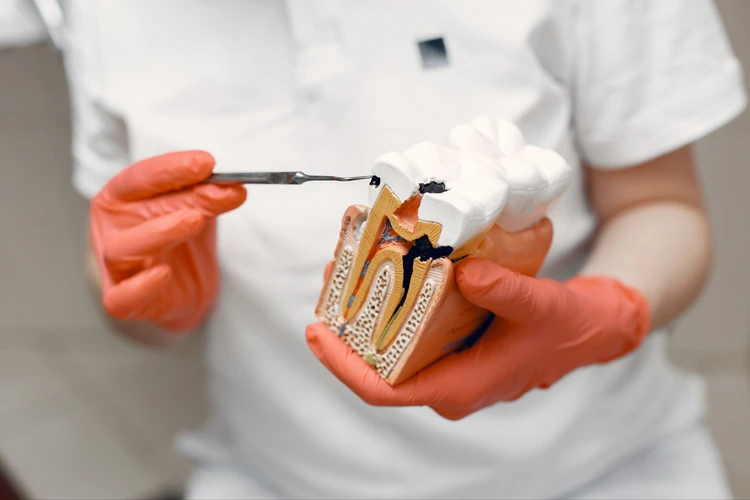
If your dentist has just told you that you need a root canal, there's a good chance the first thing you did was open Google and search for "root canal treatment Kanpur" — probably followed by "does it hurt" and "how much does it cost." You are not alone. It is one of the most searched dental questions in this city, and honestly, most of what shows up is either a price-comparison listing with no real information, or a vague marketing page that never actually answers the question you asked.
This guide is written differently. It comes from Dr Sawhney’s My Dentist – A Super Speciality Dental Clinic, located at 117/L-1/455A, Naveen Nagar, Near Panacea Hospital, Kakadeo, Kanpur, where Dr. Asheesh K. Sawhny, an MDS-qualified Endodontist with over two decades of clinical experience in root canal therapy, has performed thousands of these procedures — many of them on patients who arrived terrified and left surprised at how uneventful the whole thing was.
By the end of this article, you'll understand exactly what a root canal is, why your dentist recommended one, what it actually feels like (spoiler: it is not what you've heard), what it costs in Kanpur specifically, how to tell a good clinic from a mediocre one, and what recovery really looks like. Call +91 98385 00100 anytime you have a question, or book a consultation directly.
Table of Contents
- 1. What Is a Root Canal Treatment, Really?
- 2. Symptoms That Suggest You Might Need One
- 3. What Actually Causes a Tooth to Need a Root Canal
- 4. Root Canal vs. Extraction: Which Is Actually Better?
- 5. What Happens During the Procedure, Step by Step
- 6. Does a Root Canal Actually Hurt?
- 7. Root Canal Treatment Cost in Kanpur — An Honest Breakdown
- 8. How Many Sittings Does It Take?
- 9. Recovery Timeline: What to Expect Day by Day
- 10. Aftercare: How to Protect the Tooth Long-Term
- 11. Possible Complications and Warning Signs
- 12. Benefits of Saving Your Natural Tooth
- 13. When You Should See a Dentist Immediately
- 14. How to Choose the Right Dentist for a Root Canal in Kanpur
- 15. Why Patients Choose Dr Sawhney’s My Dentist for Root Canal Treatment
- 16. Frequently Asked Questions
- 17. Conclusion
1. What Is a Root Canal Treatment, Really?
Every tooth has a hard outer layer — enamel and dentin — protecting a soft inner chamber called the pulp. The pulp contains nerves, blood vessels, and connective tissue, and its job is mostly finished once your tooth has fully grown in; by adulthood, the tooth can survive perfectly well without it, drawing nourishment instead from the surrounding gum and bone.
When that pulp becomes infected or inflamed — usually from deep decay, a crack, or trauma — it can't heal itself the way skin or bone can, because it's sealed inside a hard shell with nowhere for infection to drain. Left alone, the infection spreads down through the root canals (the narrow channels running from the pulp chamber to the root tip) and eventually into the bone around the root, forming what's called an abscess.
A root canal treatment, medically termed endodontic therapy, removes that infected or dying pulp tissue, thoroughly cleans and disinfects the canals inside the root, shapes them, and then seals them with a biocompatible filling material. The tooth is then restored — usually with a crown — so it can go back to functioning normally. In plain terms: it's not a procedure that removes your tooth. It's the procedure that exists specifically to save it.
2. Symptoms That Suggest You Might Need One
Not every toothache means you need a root canal, and not every tooth that needs one hurts constantly. Still, certain patterns are common enough that if you recognize them, it's worth getting examined rather than waiting.
- Lingering pain after hot or cold — a quick zing when you drink something cold is normal; pain that lingers for 30 seconds or more after the stimulus is removed is not.
- Spontaneous, throbbing pain — pain that starts on its own, without any trigger, especially if it's worse at night or when lying down.
- Pain when chewing or biting — pressure sensitivity often means the infection has reached the bone around the root tip.
- Swelling in the gum near a specific tooth, sometimes with a small pimple-like bump (a sinus tract) that may drain fluid.
- Tooth darkening — a single tooth turning noticeably greyish or dark compared to its neighbours can indicate the nerve inside has died.
- Tenderness to touch — the tooth or the gum around it feels sore when you press on it.
- No pain at all — this sounds contradictory, but a nerve that has fully died can stop hurting altogether, even while infection continues to spread silently. This is why routine dental X-rays matter even when nothing seems wrong.
If you're experiencing more than one of these together, it's a reasonably strong signal, though only a clinical exam and an X-ray can confirm it. Guessing based on symptoms alone — in either direction — is one of the most common reasons patients either panic unnecessarily or delay treatment until the situation is more complicated than it needed to be.
3. What Actually Causes a Tooth to Need a Root Canal
There isn't one single cause; a handful of situations tend to lead to the same outcome.
Deep, untreated tooth decay
This is the most common cause by far. A cavity that starts small on the enamel surface, left untreated, works its way through the dentin and eventually reaches the pulp chamber. Once bacteria are inside the pulp, a filling alone can no longer solve the problem — the infected tissue has to be removed.
Cracked or fractured teeth
A crack doesn't need to be visible to expose the pulp to bacteria. Hairline fractures from biting down on something hard, grinding at night, or an old large filling weakening the tooth structure can all create a pathway for infection, even without obvious pain at first.
Trauma or injury
A blow to the mouth — from a fall, a sporting accident, or an old injury from years ago — can damage the internal blood supply to a tooth even if the tooth itself looks intact. Sometimes the nerve dies slowly over months or years after the original injury, which is why a tooth can darken long after the event that caused it.
Repeated dental procedures on the same tooth
A tooth that has been filled, then re-filled, then crowned over the years has effectively been through repeated trauma of its own. Eventually the pulp inside can become inflamed simply from cumulative wear, even without new decay.
Cracked or leaking old fillings and crowns
Old restorations that develop microscopic gaps allow bacteria to seep underneath, silently causing decay beneath a crown or filling that looks fine from the outside.
| Cause | How It Leads to Root Canal Need | Typical Warning Sign |
|---|---|---|
| Deep tooth decay | Bacteria reach the pulp chamber | Sharp pain when eating, visible cavity |
| Cracked tooth | Bacteria enter through the crack | Sharp pain on release of bite pressure |
| Trauma/injury | Internal blood supply damaged | Tooth darkening over time |
| Repeated procedures | Cumulative pulp inflammation | Sensitivity that gradually worsens |
| Leaking old restoration | Hidden decay under filling/crown | Often no symptoms until advanced |
4. Root Canal vs. Extraction: Which Is Actually Better?
This is genuinely one of the most common questions patients ask once they hear the words "root canal," because extraction sounds simpler and, on the surface, sometimes cheaper. But the comparison is rarely that straightforward once you look past the initial procedure.
| Factor | Root Canal Treatment | Extraction |
|---|---|---|
| Keeps natural tooth | Yes | No |
| Chewing function | Fully restored after crown placement | Requires replacement (implant/bridge/denture) to restore function |
| Effect on neighbouring teeth | None — teeth stay in position | Adjacent teeth can shift into the gap over time |
| Long-term cost | RCT + crown, one-time | Extraction is cheaper upfront, but replacement (implant/bridge) usually costs more overall |
| Bone preservation | Jawbone stimulation continues naturally | Bone at the site gradually resorbs without a tooth or implant |
| Appearance | Natural tooth retained | Gap visible unless replaced |
| Recovery time | Usually 24–48 hours of mild sensitivity | Similar, but socket healing takes longer |
The honest clinical answer: whenever a tooth is savable, saving it is almost always the better long-term decision. Extraction is the right call only when the tooth is fractured below the gumline, has insufficient bone support, or the root canal system is anatomically inaccessible — situations that are the exception, not the rule. At Dr Sawhney’s My Dentist, we don't default to extraction because it's faster; we recommend it only when saving the tooth genuinely isn't realistic, and we'll tell you exactly why if that's the case.
5. What Happens During the Procedure, Step by Step
Understanding the actual sequence tends to remove most of the anxiety, because it turns something abstract and frightening into something ordinary and procedural.
Step 1: Diagnosis and digital X-ray
A digital radiograph shows the number of canals, root curvature, and extent of infection. This step alone rules out guesswork — treatment is planned around what's actually happening inside the tooth, not assumed.
Step 2: Local anaesthesia
The area is numbed completely before anything else happens. Modern anaesthesia, delivered slowly and with the right technique, is far less uncomfortable than most people expect — often less noticeable than a routine cleaning.
Step 3: Isolating the tooth
A thin rubber sheet called a rubber dam is placed around the tooth. This keeps the area completely dry and sterile, and — as a practical bonus — stops any debris or liquid from reaching the throat during treatment.
Step 4: Accessing the pulp chamber
A small opening is made through the top of the tooth to reach the pulp chamber. Because the area is fully numb, this step is not painful, even though it sounds significant.
Step 5: Removing the infected pulp
Using fine instruments — increasingly rotary (motor-driven) files rather than older hand files — the infected tissue is carefully removed from each canal.
Step 6: Cleaning, shaping, and disinfecting
Each canal is cleaned, shaped, and irrigated with antimicrobial solutions to eliminate bacteria from areas invisible to the eye. This is the step where precision matters most — inadequate cleaning is the single biggest reason root canals fail later.
Step 7: Filling and sealing
Once the canals are clean and dry, they're filled with a biocompatible material called gutta-percha, sealed to prevent any future bacterial re-entry.
Step 8: Restoration with a crown
A tooth that has had a root canal is more brittle than a healthy one, since it no longer has an internal blood supply. A crown is placed over it — usually in a separate visit — to protect it from fracturing under everyday biting force.
6. Does a Root Canal Actually Hurt?
This is, understandably, the question behind every other question. The honest answer is: modern root canal treatment, done properly, is not painful during the procedure itself. The discomfort people associate with root canals almost always predates the treatment — it's the untreated infection causing the pain, not the treatment that resolves it.
What has changed the experience dramatically over the last two decades is a combination of factors: better anaesthesia delivery, rotary instruments that clean canals more efficiently and gently than older hand tools, and apex locators that let the dentist work with precision instead of guesswork. Most patients describe the sensation during treatment as pressure and vibration, not pain.
Where mild discomfort does show up is after the anaesthesia wears off, for a day or two — similar to the ache you'd feel after any dental procedure involving the gum and bone. This is normal, manageable with standard pain relief, and steadily improves rather than worsens. If pain is increasing three or four days after treatment instead of settling down, that's the signal to call your dentist, not a normal part of recovery.
7. Root Canal Treatment Cost in Kanpur — An Honest Breakdown
This is where most sources fall short — either quoting a single flat number that doesn't apply to your situation, or refusing to give any figure at all. Root canal cost genuinely does vary, but the factors that drive that variation are specific and worth understanding, so you can ask the right questions at your consultation instead of being surprised later.
| Factor | Why It Affects Cost |
|---|---|
| Tooth type | Front teeth (1 canal) cost less than molars (3–4 canals) — more canals mean more time and material |
| Complexity | Curved roots, calcified canals, or retreatment of a previously failed RCT take longer and require more skill |
| Technique used | Rotary endodontics with apex locators typically costs more than manual hand-filing, but is faster, more precise, and gentler |
| Number of sittings | Single-visit RCT vs. multi-visit — depends on infection severity |
| Crown material | The restoration afterward (PFM, zirconia, or full ceramic) is priced separately and varies significantly by material |
| Dentist's qualification | An MDS-qualified Endodontist (specialist) typically charges more than a general dentist doing the same procedure — reflecting years of additional specialist training |
As a general orientation — not a quote, since your exact case determines the exact number — root canal treatment for a single-rooted front tooth tends to sit at the lower end of the range, while a multi-canal molar retreatment sits at the higher end, with the crown priced separately depending on the material you choose. The only way to get an accurate number for your specific tooth is a clinical exam and X-ray, which is why we don't publish a single blanket figure — anyone who does, without having seen your tooth, is giving you a guess, not a quote.
What we can promise is this: at Dr Sawhney’s My Dentist, you will see the full treatment plan and cost before anything begins, not partway through. Book a consultation to get an exact estimate for your case.
8. How Many Sittings Does It Take?
Modern rotary endodontics has made single-visit root canal treatment realistic for many cases — particularly straightforward ones without significant infection. That said, "single sitting" isn't a universal promise; it depends on the specific tooth.
- Single-visit RCT is typical for a tooth with mild to moderate infection, accessible canals, and no active abscess.
- Two to three visits may be needed when there's significant infection requiring the canal to be medicated and allowed to settle before final sealing, or when canal anatomy is unusually complex.
- Retreatment cases (a previous root canal that has failed) almost always take longer, since old filling material has to be carefully removed before the canal can be recleaned.
Your dentist should tell you upfront, after the X-ray, roughly how many visits your specific case is likely to need — and why. If a clinic promises "always one sitting" for every case without having examined the tooth, that's a marketing line, not a clinical assessment.
9. Recovery Timeline: What to Expect Day by Day
Day 1 (the day of treatment)
Numbness lingers for a few hours — avoid eating until it wears off, to prevent accidentally biting your cheek or tongue. Mild soreness around the tooth and gum is normal as the anaesthesia fades.
Day 2–3
This is when residual tenderness is most noticeable, especially when biting directly on the tooth. Over-the-counter pain relief, as advised by your dentist, is usually sufficient. Swelling, if any, should be minimal and reducing, not increasing.
Day 4–7
Discomfort should be largely resolved by this point for most patients. If a temporary filling was placed while awaiting the permanent crown, avoid chewing directly on that tooth with hard or sticky foods.
2–4 weeks: Crown placement
Once the tooth has settled, the permanent crown is fitted. This restores full chewing function and protects the tooth from fracture — skipping this step, or delaying it too long, is one of the most common reasons a successfully treated tooth later cracks.
10. Aftercare: How to Protect the Tooth Long-Term
- Get the permanent crown placed promptly — a root-canal-treated tooth without its final restoration is significantly more prone to fracture.
- Avoid chewing hard foods directly on that tooth until the crown is in place, and be mindful of very hard foods (ice, hard candy, bones) even afterward.
- Maintain regular brushing and flossing — a treated tooth can still develop new decay at the gumline or around the crown margin if oral hygiene lapses.
- Attend follow-up checkups so your dentist can confirm healing on X-ray over time, since some issues are only visible radiographically, not felt.
- Don't ignore new discomfort months or years later — while root canal success rates are high, no dental treatment is permanently immune to reinfection if hygiene or restoration integrity breaks down.
11. Possible Complications and Warning Signs
Root canal treatment has a high success rate, particularly when done by a specialist using modern technique. Still, it's worth knowing what a genuine complication looks like versus normal healing.
| Normal Healing | Warning Sign — Contact Your Dentist |
|---|---|
| Mild soreness for 2–3 days, gradually improving | Pain that worsens after day 3–4 instead of easing |
| Slight tenderness when biting directly | Sharp, throbbing pain unrelieved by medication |
| No visible swelling, or minimal swelling reducing daily | Increasing facial or gum swelling |
| Temporary filling feels slightly different than natural tooth | Temporary filling falls out and exposes the tooth |
| - | Fever alongside dental pain |
Genuine complications — persistent infection, a missed canal, or a vertical root fracture — are uncommon with proper technique but not impossible with any biological tissue. This is exactly why choosing a specialist with rotary endodontic experience, rather than the cheapest available option, matters: the risk of needing retreatment later is directly tied to how thoroughly the canals were cleaned the first time.
12. Benefits of Saving Your Natural Tooth
- No adjacent tooth movement — your bite and alignment stay exactly as they were.
- Natural chewing efficiency — nothing replaces the feel and function of your own tooth root and periodontal ligament.
- Preserves jawbone — a natural tooth root continues to stimulate the surrounding bone, which an empty socket cannot.
- Cost-effective over a lifetime — avoids the higher combined cost of extraction plus implant or bridge later.
- Aesthetic continuity — no visible gap, no need for a prosthetic replacement.
- Usually resolves pain immediately — most patients feel dramatic relief from the underlying infection pain within a day of treatment.
13. When You Should See a Dentist Immediately
Certain symptoms move a situation from "book a routine appointment soon" to "get seen urgently":
- Severe, throbbing pain that isn't controlled by over-the-counter medication
- Visible facial swelling, especially if it's spreading or affecting your eye or airway
- Fever combined with dental pain
- Pus or a foul taste draining from the gum near a tooth
- Difficulty opening your mouth fully, swallowing, or breathing comfortably
Facial swelling with fever, or any difficulty breathing or swallowing, is a dental emergency that needs same-day attention — not a wait-and-see situation. If you're experiencing this, call +91 98385 00100 immediately, or head to the nearest emergency facility if it's outside clinic hours and symptoms are severe.
14. How to Choose the Right Dentist for a Root Canal in Kanpur
Since this is a procedure where technique quality directly affects long-term success, it's worth being deliberate about who performs it.
| What to Check | Why It Matters |
|---|---|
| MDS in Endodontics (or equivalent specialist training) | Three additional years of focused training beyond a general BDS degree, specifically in root canal therapy |
| Rotary endodontic technology | Faster, more precise canal cleaning with lower risk of missed canals compared to manual hand-filing |
| Digital X-ray and apex locator use | Confirms exact canal length and root anatomy before and during treatment — reduces guesswork |
| Transparent cost discussion before treatment | You should know the estimated cost and number of visits before starting, not mid-procedure |
| Sterilization protocol (Class-B autoclave) | Prevents cross-infection between patients — ask directly if unsure |
| Willingness to explain your specific X-ray | A dentist confident in the diagnosis will happily show and explain your X-ray, not just state a conclusion |
15. Why Patients Choose Dr Sawhney’s My Dentist for Root Canal Treatment
Dr Sawhney’s My Dentist – A Super Speciality Dental Clinic, located at 117/L-1/455A, Naveen Nagar, Near Panacea Hospital, Kakadeo, Kanpur, has been treating patients since 2005 — meaning we've now cared for the same families across two decades, from grandparents to grandchildren.
- Specialist-led endodontics. Root canal treatment at our clinic is performed by Dr. Asheesh K. Sawhny, MDS Endodontist, not a general dentist rotating through every procedure type — his additional years of specialist training are specifically in this field.
- Rotary endodontics with apex locators for precise, gentle, efficient canal cleaning — reducing both discomfort and the risk of needing retreatment later.
- Transparent, upfront treatment planning. You'll see your X-ray, understand exactly what's happening in your tooth, and know the cost before treatment begins — no surprises partway through.
- Class-B autoclave sterilization with full barrier protocol for every single patient, every single day.
- Same-tooth crown planning from day one, so your treatment plan includes protecting the tooth long-term, not just resolving the immediate infection.
- Conveniently located near Panacea Hospital, Kakadeo — easily reachable from Naveen Nagar, Swaroop Nagar, Govind Nagar, and surrounding areas of Kanpur.
Book Your Root Canal Consultation Today →
16. Frequently Asked Questions
Is root canal treatment painful?
Not during the procedure — the area is fully numbed, and modern rotary technique makes the treatment itself largely painless. Mild soreness for a day or two afterward, as the anaesthesia wears off, is normal and manageable with standard pain relief.
How much does root canal treatment cost in Kanpur?
Cost depends on the tooth type, number of canals, complexity, technique used, and crown material chosen afterward. A single-canal front tooth typically costs less than a multi-canal molar or a retreatment case. An exact quote requires a clinical exam and X-ray.
How many visits does a root canal usually take?
Many straightforward cases can be completed in a single sitting with modern rotary technique. More complex or infected cases may need two to three visits to allow the infection to settle before final sealing.
Is a root canal better than extraction?
Whenever a tooth is savable, retaining your natural tooth via root canal is almost always preferable to extraction — it preserves chewing function, prevents neighbouring teeth from shifting, and maintains jawbone health, without the added future cost of an implant or bridge.
Do I need a crown after a root canal?
In most cases, yes — particularly for back teeth that bear heavy chewing force. A root-canal-treated tooth is more brittle without its blood supply, and a crown protects it from fracturing.
How long does a root canal-treated tooth last?
With a proper crown restoration and good oral hygiene, a root-canal-treated tooth can last for decades — often a lifetime — the same as any natural tooth cared for well.
Can a root canal fail?
It's uncommon with proper technique, but reinfection can occur if a canal is missed, the seal breaks down, or the crown restoration fails. This is why choosing a specialist with rotary endodontic experience and getting the permanent crown placed promptly both matter.
What should I eat after a root canal?
Soft foods on the opposite side of your mouth for the first day or two, avoiding very hot, hard, or sticky foods on the treated tooth until the permanent crown is placed.
17. Conclusion
A root canal has an outsized reputation for being frightening — one that modern dentistry, honestly, doesn't deserve anymore. The procedure that actually happens today, with rotary instruments, precise anaesthesia, and a specialist who has done this thousands of times, bears little resemblance to what most people imagine when they hear the words "root canal." In almost every case, it is the procedure that saves your tooth and ends your pain — not the thing to be afraid of.
If you're dealing with tooth pain, sensitivity, or have already been told you need a root canal, the most useful next step is simply getting an accurate diagnosis — a proper exam and X-ray, from someone who will explain exactly what they see and what it means for your specific tooth.
Dr Sawhney’s My Dentist – A Super Speciality Dental Clinic, Kakadeo, Kanpur, is here for that conversation. Call +91 98385 00100, or book your consultation online — Dr. Asheesh K. Sawhny and the team will walk you through your options honestly, with no pressure and no surprises.
Related Articles
 Treatments
• Dr. Asheesh K. Sawhny
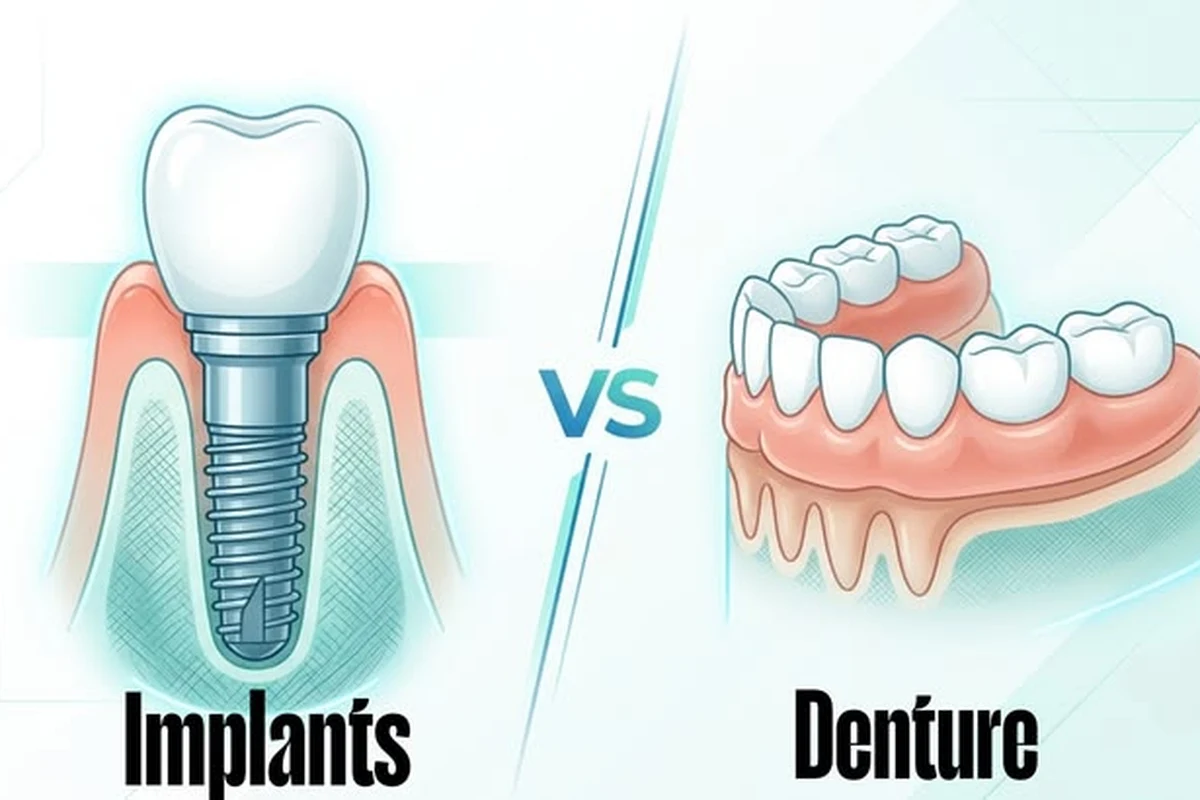
Dental Implants vs Dentures in Kanpur: Which Is Better for Missing Teeth?
Comparing dental implants vs dentures in Kanpur? Get a clear, specialist-written comparison of cost, durability, comfort and suitability before you decide.
Read More Treatments
• Dr. Asheesh K. Sawhny
Best Endodontist & Implantologist in Kanpur – Dr. Asheesh Sawhny
Looking for the best endodontist or implantologist in Kanpur? Read this specialist-written guide to root canal treatment and dental implants at Dr Sawhney's My Dentist, Kakadeo.
Read More Treatments
• Dr. Karuna Singh Sawhny
Best Orthodontist and Invisalign Provider in Kanpur – Dr. Karuna Sawhny
Weighing up braces or Invisalign in Kanpur? Here's an honest, specialist-written guide to choosing the right orthodontist — from an MDS Orthodontist and certified Invisalign provider.
Read MoreHave a dental question?
Speak with a specialist at DR SAWHNEY’S MY DENTIST — we'll guide you honestly.